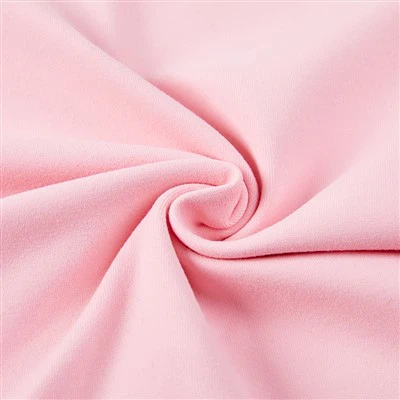
Does ribbed swimwear fabric have a smooth or rough texture?
As a supplier of Ribbed Swimwear Fabric, I've been asked this question countless times by customers, designers, and enthusiasts alike. The answer isn't as straightforward as one might think, as it depends on several factors that influence the overall feel of the fabric. In this blog, we'll delve into the intricacies of ribbed swimwear fabric texture, exploring the science behind it and how you can make the most informed choice for your next swimwear project.
Understanding Ribbed Swimwear Fabric
Ribbed swimwear fabric is characterized by its distinctive raised lines, or ribs, that run parallel to each other. These ribs can vary in width, height, and spacing, creating a range of visual and tactile effects. The fabric is typically made from a blend of synthetic fibers, such as polyester and spandex, which offer excellent stretch, durability, and resistance to chlorine and saltwater.
The primary purpose of the ribs in swimwear fabric is to enhance the garment's functionality and performance. The raised lines provide additional support and compression, which can help to reduce drag in the water and improve the swimmer's speed and efficiency. Ribbed fabric also has a higher surface area than smooth fabric, which can help to wick away moisture and keep the wearer dry and comfortable.
The Texture Debate: Smooth or Rough?
Now, let's get to the heart of the matter: Is ribbed swimwear fabric smooth or rough? The answer is that it can be both, depending on a variety of factors.
1. Rib Design and Dimensions
The width, height, and spacing of the ribs have a significant impact on the fabric's texture. Narrow, closely spaced ribs tend to create a smoother texture, as there is less surface area for the skin to come into contact with. On the other hand, wide, widely spaced ribs can feel more rough or bumpy, as the raised lines are more prominent.
2. Fiber Blend
The type and percentage of fibers used in the fabric blend can also affect the texture. Fabrics with a higher percentage of spandex tend to be softer and more stretchy, while those with a higher percentage of polyester may feel more firm and smooth. Additionally, some fabrics may be treated with special finishes or coatings to enhance their smoothness or reduce friction.
3. Manufacturing Process
The way the fabric is manufactured can also influence its texture. For example, fabrics that are knitted on a fine gauge machine tend to have a smoother texture than those that are knitted on a coarser gauge machine. Additionally, the finishing process, such as heat-setting or calendaring, can help to smooth out the fabric and reduce any roughness.
Smooth Textured Ribbed Swimwear Fabric
In some cases, ribbed swimwear fabric can have a smooth texture that feels soft and comfortable against the skin. This type of fabric is often preferred by swimmers who are sensitive to rough or scratchy materials, or who want a more streamlined look.

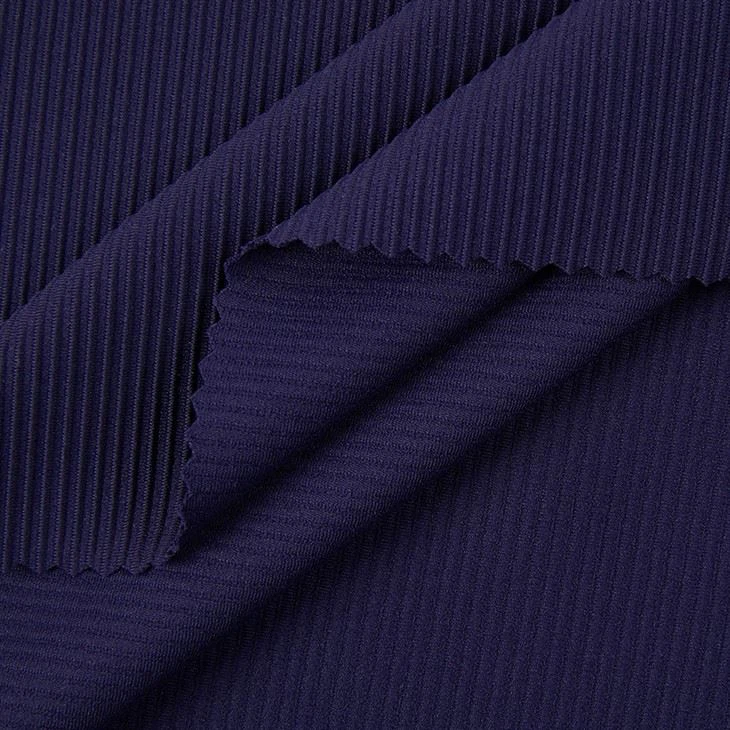
Smooth ribbed fabric is typically made with narrow, closely spaced ribs that are flush with the surface of the fabric. This creates a subtle, textured effect that is barely noticeable to the touch. The fabric may also be treated with a softening agent or finish to enhance its smoothness and reduce any friction.
One of the advantages of smooth ribbed swimwear fabric is its versatility. It can be used to create a wide range of swimwear styles, from classic one-piece suits to trendy bikinis. The smooth texture also makes it ideal for layering with other fabrics, such as Swimsuit Lining Fabric, to create a more comfortable and supportive garment.
Rough Textured Ribbed Swimwear Fabric
On the other hand, some ribbed swimwear fabric has a rougher texture that feels more bumpy or uneven against the skin. This type of fabric is often preferred by swimmers who want a more supportive and compressive fit, or who are looking for a fabric that provides additional grip in the water.
Rough ribbed fabric is typically made with wide, widely spaced ribs that are more prominent and raised. This creates a more pronounced textured effect that can be felt when the fabric comes into contact with the skin. The fabric may also be made with a higher percentage of polyester or other synthetic fibers to provide additional strength and durability.
One of the advantages of rough ribbed swimwear fabric is its performance. The raised ribs provide additional support and compression, which can help to reduce muscle fatigue and improve the swimmer's speed and efficiency. The rough texture also provides additional grip in the water, which can help to prevent the swimwear from slipping or riding up.
Choosing the Right Texture for Your Needs
When it comes to choosing the right texture for your ribbed swimwear fabric, there are several factors to consider. Here are some tips to help you make the best decision:
1. Comfort
Comfort should be your top priority when choosing swimwear fabric. If you have sensitive skin, you may want to opt for a smooth-textured fabric that feels soft and gentle against your skin. On the other hand, if you don't mind a slightly rougher texture, a rough-textured fabric may provide the additional support and compression you need.
2. Performance
If you're a competitive swimmer or an avid water sports enthusiast, you may want to choose a fabric that offers excellent performance. A rough-textured fabric with wide, widely spaced ribs can provide additional support and compression, which can help to reduce muscle fatigue and improve your speed and efficiency in the water.
3. Style
The texture of the fabric can also have an impact on the overall style of your swimwear. A smooth-textured fabric can create a more streamlined and sophisticated look, while a rough-textured fabric can add a more casual and sporty touch. Consider the style of the swimwear you want to create and choose a fabric texture that complements it.
Conclusion
In conclusion, the texture of ribbed swimwear fabric can vary depending on several factors, including the rib design, fiber blend, and manufacturing process. While some ribbed swimwear fabric has a smooth texture that feels soft and comfortable against the skin, others have a rougher texture that provides additional support and compression.
As a supplier of Ribbed Swimwear Fabric, we offer a wide range of textures and styles to meet the needs of our customers. Whether you're looking for a smooth-textured fabric for a comfortable and stylish swimwear design or a rough-textured fabric for enhanced performance and support, we have the perfect solution for you.
If you're interested in learning more about our ribbed swimwear fabric or would like to discuss your specific requirements, please don't hesitate to contact us. Our team of experts is always on hand to provide you with the information and support you need to make the best decision for your swimwear project. You can easily browse our Swimwear Fabric By The Metre options to start planning your next creation. Let's work together to bring your swimwear vision to life!
References
- Textile Institute. (2009). Handbook of swimwear fabrics. Woodhead Publishing Limited.
- Schwarz, V. (2015). The science of swimwear: Materials, design, and performance. New York: Routledge.