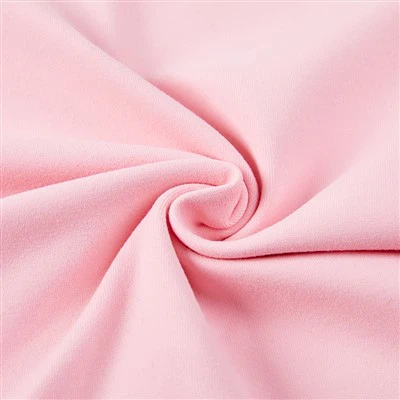
Determining whether a fabric is a nylon spandex blend can be crucial, especially for those in the fashion, sports, and manufacturing industries. As a supplier of high - quality nylon spandex fabric, I've had extensive experience with this material. In this blog, I'll share some reliable methods to identify nylon spandex fabric.
Physical Characteristics
Stretch and Recovery
One of the most distinctive features of nylon spandex fabric is its excellent stretch and recovery properties. Spandex, also known as elastane, is responsible for this characteristic. When you gently pull a small section of the fabric, it should stretch easily in both the warp (lengthwise) and weft (widthwise) directions. For instance, if you're testing a piece of fabric that is supposed to be used for sportswear, like leggings, it should stretch significantly without tearing.
Once you release the tension, the fabric should quickly return to its original shape. A well - made nylon spandex fabric won't retain any significant wrinkles or distortion from the stretching. If a fabric stretches but doesn't bounce back, it may not have enough spandex content or could be a different type of stretchy fabric altogether. Our Performance Nylon & Spandex Fabric is a prime example of a fabric with outstanding stretch and recovery, making it ideal for high - performance athletic applications.
Softness and Smoothness
Nylon spandex fabric typically has a soft and smooth texture. Run your fingers over the fabric surface. It should feel silky and pleasant to the touch. The nylon component gives the fabric a certain sheen and a smooth finish, while the spandex doesn't detract from this softness. In contrast, some other fabrics may feel rough, scratchy, or have a more grainy texture.
For example, compared to a pure cotton fabric, which can be more coarse, nylon spandex has a much more refined feel. Our 82% Nylon 18% Spandex Fabric offers a luxurious softness that is perfect for intimate apparel and high - end sportswear.
Weight
The weight of nylon spandex fabric can vary depending on its intended use. However, in general, it tends to be lightweight compared to some other fabrics. This is beneficial for applications where mobility and comfort are important, such as in activewear.
Pick up a small piece of the fabric and assess its weight in your hand. If it feels overly heavy, it might not be a nylon spandex blend or could have a very high - density construction. Our lightweight nylon spandex fabrics are designed to provide maximum comfort without sacrificing durability, making them suitable for a wide range of products.
Visual Inspection
Appearance
Nylon spandex fabric often has a slight sheen. This sheen is a result of the nylon fibers reflecting light. Look at the fabric under different lighting conditions. In bright light, you should notice a subtle glow on the fabric surface.
The fabric also usually has a uniform appearance. There should be no visible clumps or unevenness in the weave. If you see irregularities, it could indicate a problem with the manufacturing process or that the fabric is a blend with other materials that are not well - integrated. Our Nylon Spandex Mesh Fabric has a unique appearance with a fine mesh pattern that is both functional and aesthetically pleasing.
Colorfastness
Nylon spandex fabrics generally have good colorfastness. This means that the colors of the fabric won't fade easily when exposed to light, washing, or other environmental factors. To test this, you can take a small, inconspicuous piece of the fabric and dampen it with a white cloth. Rub the dampened area gently. If a significant amount of color transfers to the white cloth, the fabric may have poor colorfastness.
In our production process, we use high - quality dyes and treatments to ensure that our nylon spandex fabrics maintain their vibrant colors for a long time. This is especially important for products like swimwear and activewear, which are often exposed to water, sunlight, and chemicals.
Burn Test
A burn test can be a more definitive way to identify nylon spandex fabric, but it should be done with extreme caution. Cut a small, inconspicuous piece of the fabric. Use a pair of tweezers to hold the fabric and bring a flame close to one end.
Nylon burns slowly and melts, forming a hard, round bead at the end. It has a slightly sweet smell when burning. Spandex, on the other hand, burns quickly and gives off a pungent, chemical - like smell. When you test a nylon spandex blend, you'll notice a combination of these characteristics. The fabric will start to melt and burn, and you'll smell both the sweet scent of nylon and the pungent odor of spandex.
However, it's important to note that this test should only be done in a well - ventilated area and with proper safety precautions. Also, this test will damage the fabric, so it's best to use it as a last resort.
Chemical Tests
Chemical tests can also be used to identify nylon spandex fabric, but these are more complex and usually require specialized equipment and knowledge. For example, you can use certain solvents to dissolve or react with the fibers in the fabric.


Nylon is soluble in formic acid, while spandex is resistant to many common solvents. By carefully applying a small amount of formic acid to a tiny piece of the fabric and observing the reaction, you can get an idea of the fabric's composition. However, these tests should only be carried out by professionals in a laboratory setting.
Microscopic Examination
Under a microscope, nylon spandex fabric has a distinct appearance. Nylon fibers are typically smooth and cylindrical, while spandex fibers have a more elastic and irregular shape. A trained eye can identify these differences by examining the fabric at a microscopic level.
Microscopic examination can also help detect any impurities or other fibers that may be present in the fabric. This method is often used in quality control in the textile industry to ensure the purity and quality of the nylon spandex fabric.
If you're in the market for high - quality nylon spandex fabric, whether for fashion, sports, or other applications, I encourage you to reach out to us. We have a wide range of nylon spandex fabrics to meet your specific needs. Our team of experts can provide you with detailed information about our products and help you choose the right fabric for your project. Contact us to start a procurement discussion and discover how our nylon spandex fabrics can enhance your products.
References
- Textile Institute. "Textile Testing Handbook." Woodhead Publishing, 2019.
- Horrocks, A. R., & Anand, S. C. "Handbook of Technical Textiles." Woodhead Publishing, 2000.