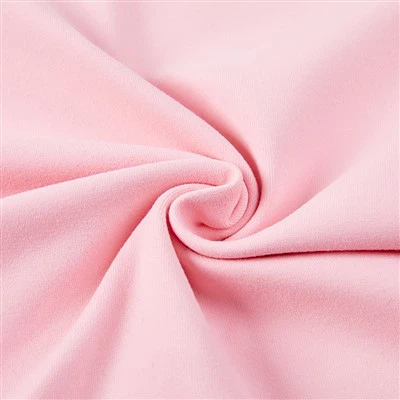
As a supplier of polyester spandex fabric, I've encountered numerous inquiries and concerns from customers regarding the static - generating tendency of this fabric. In this blog, I'll delve into what causes the static - generating tendency of polyester spandex fabric, its implications, and how to manage it.
Understanding Polyester Spandex Fabric
Polyester spandex fabric is a blend of two synthetic fibers: polyester and spandex. Polyester is a strong, durable, and wrinkle - resistant fiber known for its quick - drying properties. Spandex, on the other hand, is highly elastic, allowing the fabric to stretch and recover its shape easily. This combination results in a fabric that is widely used in sportswear, swimwear, and form - fitting clothing due to its comfort, flexibility, and durability.
There are several types of polyester spandex fabric available in the market. For instance, Polyester Spandex Jersey Fabric is soft, stretchy, and has a smooth texture, making it ideal for T - shirts and activewear. 100% Polyester Quick - drying Mesh Fabric is breathable and is often used in sports equipment and outerwear. Polyester Spandex Satin Fabric has a shiny surface and is commonly used in evening gowns and lingerie.
The Static - Generating Tendency of Polyester Spandex Fabric
Causes of Static Electricity
Static electricity is generated when two different materials come into contact and then separate. Electrons are transferred from one material to the other, creating an imbalance of charges. In the case of polyester spandex fabric, both polyester and spandex are synthetic fibers. Synthetic fibers have a high resistance to the flow of electricity, which means they can easily accumulate static charges.
When the fabric rubs against other materials, such as skin, other clothing, or furniture, electrons are transferred. The dryness of the environment also plays a significant role. In low - humidity conditions, there is less moisture in the air to conduct the static charges away, allowing them to build up on the fabric's surface.


Implications of Static Electricity in Polyester Spandex Fabric
The static - generating tendency of polyester spandex fabric can have several implications. Firstly, it can cause the fabric to cling to the body. This is not only uncomfortable but can also be unflattering, especially in form - fitting clothing. For example, in sportswear, the clinging effect can restrict movement and make the wearer feel self - conscious.
Secondly, static electricity can attract dust and lint to the fabric. This makes the clothing look dirty and requires more frequent cleaning. In addition, the static charges can cause the fabric to produce a crackling sound when touched, which can be annoying for the wearer.
Factors Affecting the Static - Generating Tendency
Fiber Composition
The ratio of polyester to spandex in the fabric can affect its static - generating tendency. A higher proportion of polyester generally means a greater tendency to generate static electricity because polyester is more prone to static build - up compared to spandex. However, spandex can also contribute to static to some extent, especially when the fabric is stretched and rubbed against other surfaces.
Fabric Finish
The finish applied to the fabric can either increase or decrease its static - generating tendency. Some finishes, such as anti - static treatments, are designed to reduce the build - up of static charges. These treatments work by increasing the conductivity of the fabric, allowing the static charges to dissipate more easily. On the other hand, certain waterproof or water - repellent finishes can increase the static - generating tendency because they can reduce the fabric's ability to absorb moisture from the air.
Environmental Conditions
As mentioned earlier, humidity is a crucial factor. In dry environments, such as during the winter months or in air - conditioned rooms, the static - generating tendency of polyester spandex fabric is much higher. Temperature can also have an impact. Higher temperatures can increase the movement of electrons, which may contribute to more static build - up.
Managing the Static - Generating Tendency
During Fabric Production
As a supplier, we take several measures during the production process to reduce the static - generating tendency of our polyester spandex fabric. We can apply anti - static agents during the dyeing and finishing stages. These agents can be either chemical or natural. Chemical anti - static agents work by forming a thin layer on the fabric surface that conducts electricity. Natural anti - static agents, such as some plant - based extracts, can also be used, which are more environmentally friendly.
We also control the fiber blend carefully. By adjusting the ratio of polyester to spandex, we can optimize the fabric's properties, including its static - generating tendency. Additionally, we ensure that the fabric is properly moisturized during the production process to prevent excessive static build - up.
For End - Users
End - users can also take steps to manage the static - generating tendency of polyester spandex fabric. Using a fabric softener during the washing process can help reduce static. Fabric softeners contain chemicals that coat the fabric fibers, making them more slippery and reducing the friction that causes static.
Another option is to use anti - static sprays. These sprays can be applied directly to the fabric before wearing. They work by creating a conductive layer on the fabric surface, allowing the static charges to dissipate.
In addition, increasing the humidity in the environment can also help. Using a humidifier in the room where the clothing is stored or worn can add moisture to the air, reducing the static - generating tendency of the fabric.
Conclusion
The static - generating tendency of polyester spandex fabric is a common issue that is caused by the properties of the synthetic fibers, friction, and environmental conditions. However, through proper production techniques and end - user management, this issue can be effectively mitigated.
As a supplier of high - quality polyester spandex fabric, we are committed to providing our customers with fabrics that not only have excellent stretch and durability but also minimal static problems. If you are interested in our polyester spandex fabric products, whether it's Polyester Spandex Jersey Fabric, 100% Polyester Quick - drying Mesh Fabric, or Polyester Spandex Satin Fabric, please feel free to contact us for procurement and further discussions. We look forward to working with you to meet your fabric needs.
References
- "Textile Science and Technology: Fibers, Yarns, Fabrics, and Nonwovens", by Horst - Peter Reiners
- "Handbook of Textile Fibre Structure", edited by Richard Hearle